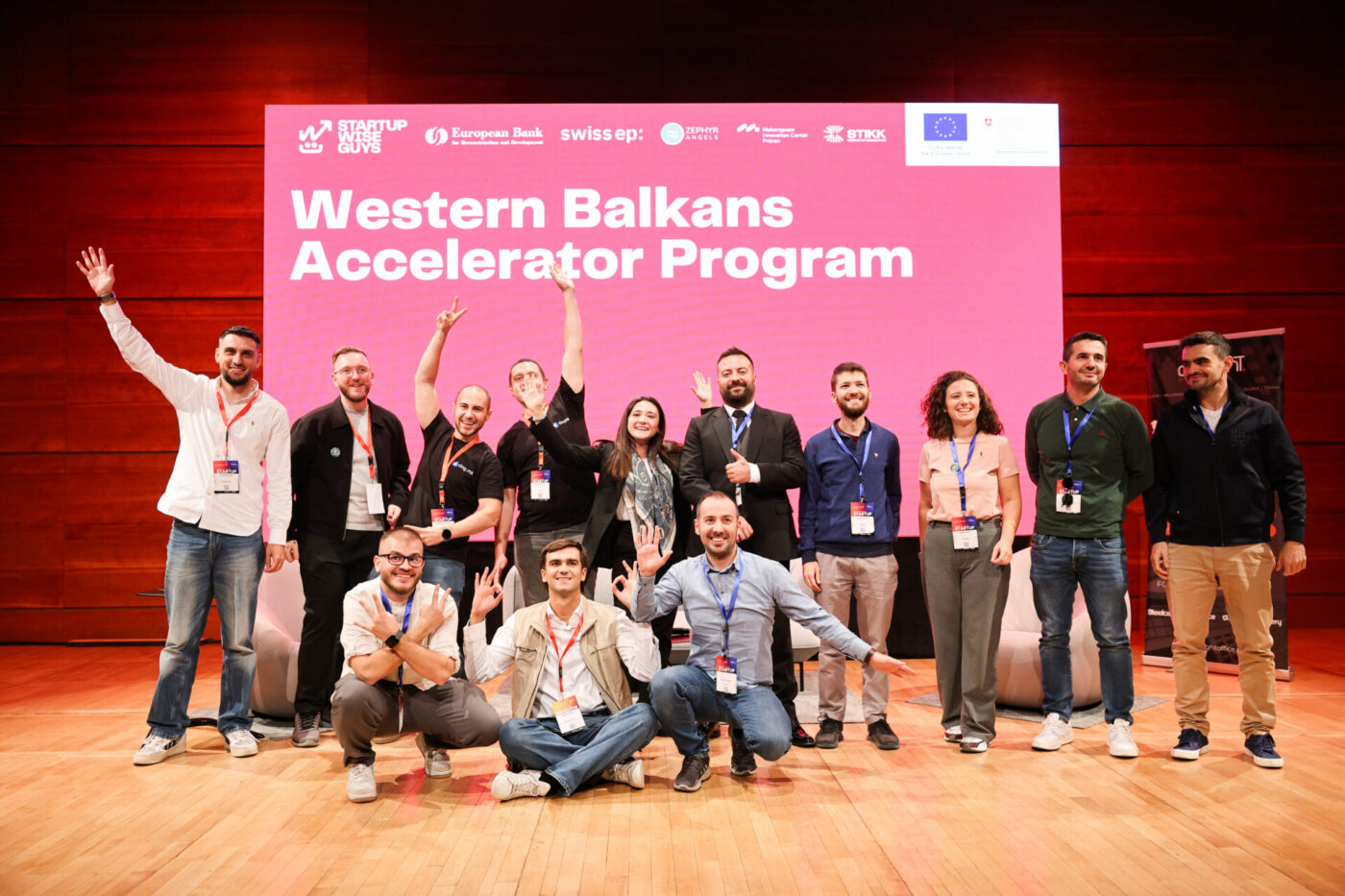
Three weeks into the Western Balkans Accelerator Program, founders from Kosovo and North Macedonia met in Skopje for the first onsite bootcamp, combining hands-on work, mentoring and pitching with direct access to the wider regional startup ecosystem.
The Western Balkans Accelerator Program started online, but from the beginning we knew that part of its value would come from creating opportunities for founders to meet each other, work side by side and test themselves outside the usual workshop setting.
That happened for the first time in Skopje on 1–2 October.
After two weeks of online activities, KPI setting, workshops and individual conversations, the cohort came together for two days that were deliberately different from each other. The first was kept mostly inside the programme, with practical work and direct mentor support. The second opened the doors to the wider ecosystem through Startup Revolution AI Summit, where the startups had the chance to pitch, network and meet investors, founders and other ecosystem players.
It was also, quite simply, the first time many of us had met in person. That changed the dynamic quickly. Conversations that had started on Zoom became much more natural around the same table, founders started exchanging notes with each other, and mentors were able to understand the companies beyond what fits into a deck or a scheduled call.
Day 1: working on the companies, not around them
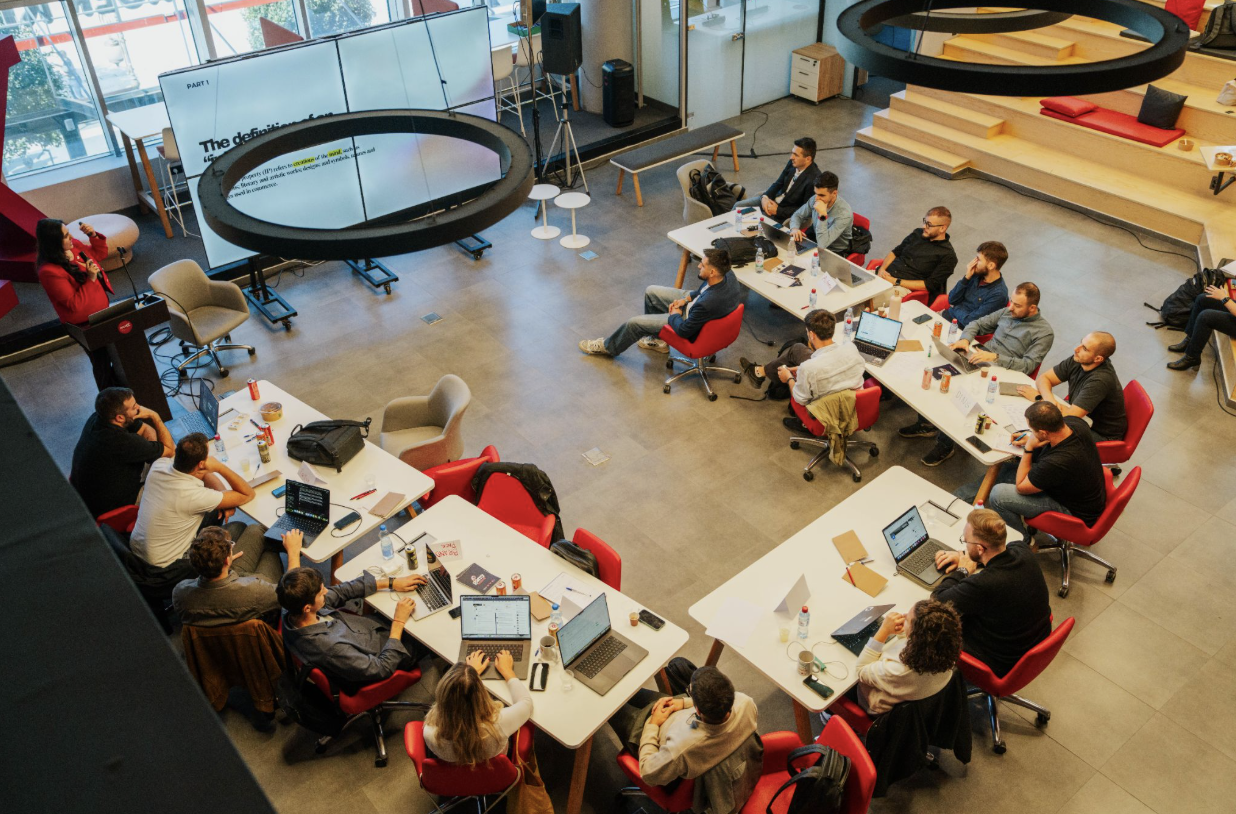
The first day was hosted at InnoX Innovation Center in central Skopje, with 10 startups and 19 startup participants joining the onsite activities.
The programme started with two practical sessions led by international experts supported by Swiss Entrepreneurship Program. Dumitru Baltatescu worked with the founders on marketing, sales and commercial growth, while Diana Karyan focused on legal readiness and GDPR.
The workshops were only one part of the day. Both mentors stayed with the cohort for dedicated 1:1 sessions, which allowed the conversations to become much more specific. Some teams needed to go deeper on their commercial model, others on legal structure or international readiness, and in several cases the useful part was simply having an external person challenge assumptions that had become normal inside the company.
That difference between teams is something we expected, and it remains one of the main characteristics of the cohort. Some startups are still validating important parts of the business, while others already have customers and are thinking about international expansion. The goal of the programme is not to pretend they are all at the same stage, but to understand where the next meaningful step is for each of them and work from there.
The afternoon also included pitch practice ahead of the following day. Giving founders three minutes to explain a company is not a perfect way to understand a business, but it is a very effective way to expose what is still unclear. When time is limited, positioning, problem, traction and ambition need to make sense quickly.
Day 2: taking the work outside the programme
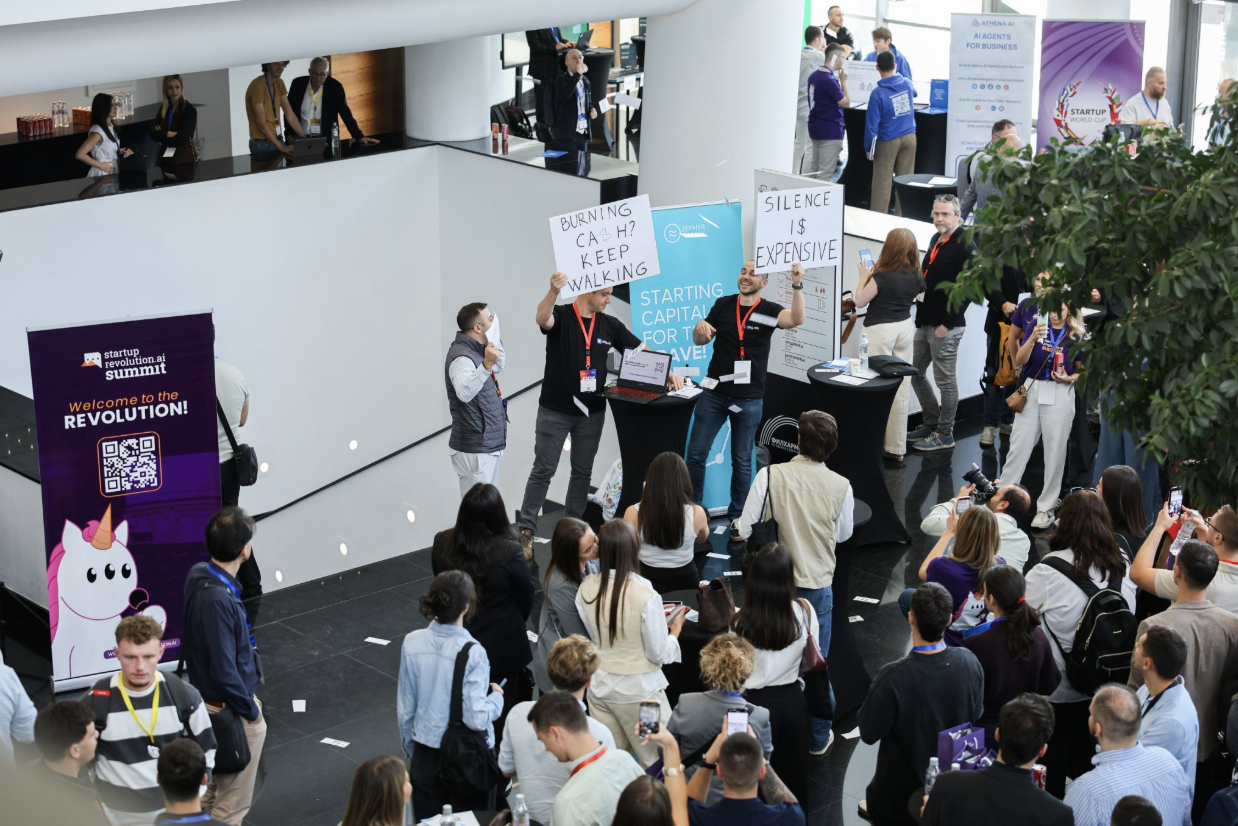
On the second day, the cohort moved into Startup Revolution AI Summit.
Rather than organising another closed accelerator day, we wanted the startups to operate in an environment where they would meet people who had no previous context on their companies and where the quality of the conversation depended on how clearly they could explain what they were building.
A dedicated WBA stage session gave the participating teams three minutes to pitch, followed by questions from the audience. More than 50 people joined the session, including business angels, venture capital investors, experts and other ecosystem stakeholders.
For us, this was not intended to be a Demo Day. We are only three weeks into the programme, and there is still a lot of work to do before the final stage. It was instead an early external checkpoint: an opportunity to understand how the startups communicate today, what questions their stories generate, and what needs to become sharper over the next months.
The overall level was encouraging, particularly considering how early we are in the journey. At the same time, “encouraging” is not the end goal. The ambition is to use the remaining programme to make the companies, and the way they present themselves, substantially stronger.
Outside the stage, founders had access to the wider Summit programme, networking opportunities and conversations with investors, mentors and other entrepreneurs. Some teams also joined the Founder Games activities, an experimental format built around startup execution, communication and visibility.
The real value of those moments, however, will not be measured by how many people exchanged LinkedIn connections during the event. It will depend on what happens afterwards: which conversations become meetings, which introductions turn into partnerships, which investor discussions continue and which founders actually follow up on the opportunities they identified.
A programme built around different layers of support
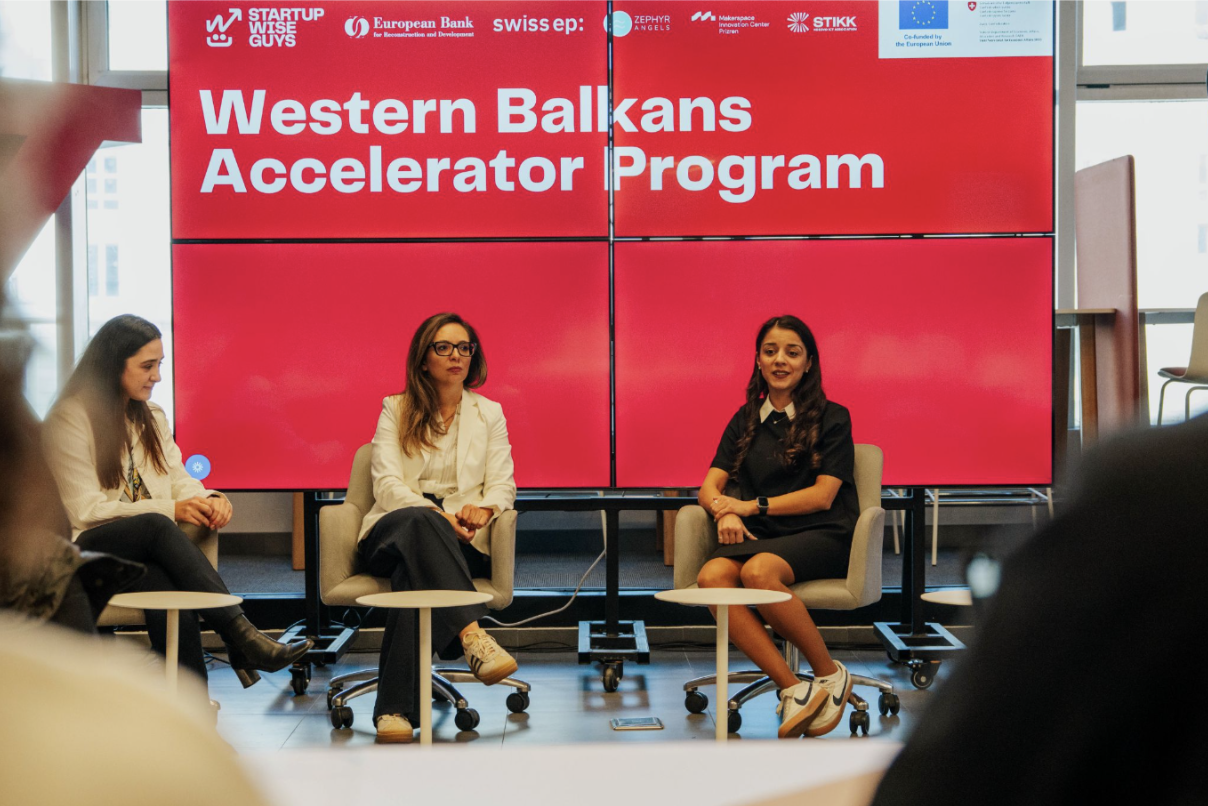
The Skopje bootcamp also showed what the programme looks like when the different partners contribute from their respective positions.
EBRD and Swiss Entrepreneurship Program joined us during the onsite, with Maja and Blagica opening the first day together with the programme team. InnoX hosted the cohort for the private sessions, while Startup Revolution created a very different environment on Day 2 by bringing the startups into a larger regional event. Gogo from Zephyr Angels also played an important local role, helping connect the cohort with investors, ecosystem actors and opportunities on the ground.
This matters particularly in markets such as Kosovo and North Macedonia, where building internationally cannot be treated as something that happens only after a company has already become successful locally.
The domestic markets are relatively small, and for ambitious technology companies the ability to access expertise, customers, capital and relationships outside their home country becomes relevant very early.
This is also consistent with what emerged during the Kosovo Startup Ecosystem Forum earlier this year. At that stage, much of the discussion was about readiness, sequencing and making sure founders were not pushed too quickly towards acceleration or fundraising before the fundamentals were there. The accelerator is now the next step in that process: working with selected companies over time and seeing how much progress can actually be created through a combination of structured support, external expertise and real market exposure.
What comes next
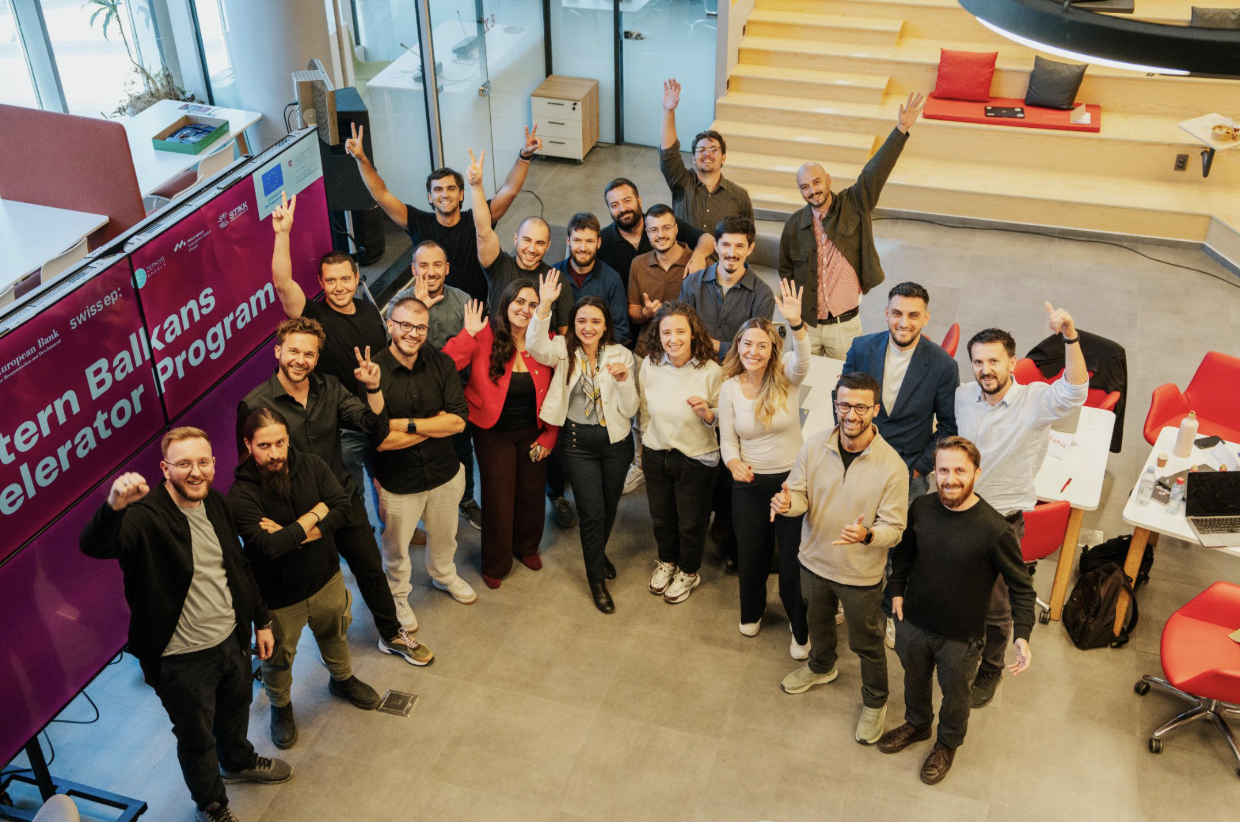
Skopje was the first physical checkpoint, not the destination.
The programme now returns online, with the next weeks focusing on areas such as global sales and marketing, product development, finance, fundraising and market expansion. The mentor feedback collected during the onsite will also feed into the individual follow-up with the teams, alongside the KPIs and priorities defined at the beginning of the programme.
Gunce Onur and Davide Coppola will continue working closely with the founders, helping connect the different inputs from mentors, partners and programme activities with the priorities of each startup.
We came back from Skopje with a cohort that is still heterogeneous, but with a clearer picture of where the strongest opportunities and gaps are.
The first onsite gave the startups a chance to work together, receive direct feedback and expose their companies to people outside the programme. Now comes the less visible part: following up, executing and showing that the energy created over two days can translate into progress over the next two months.
October 12, 2026